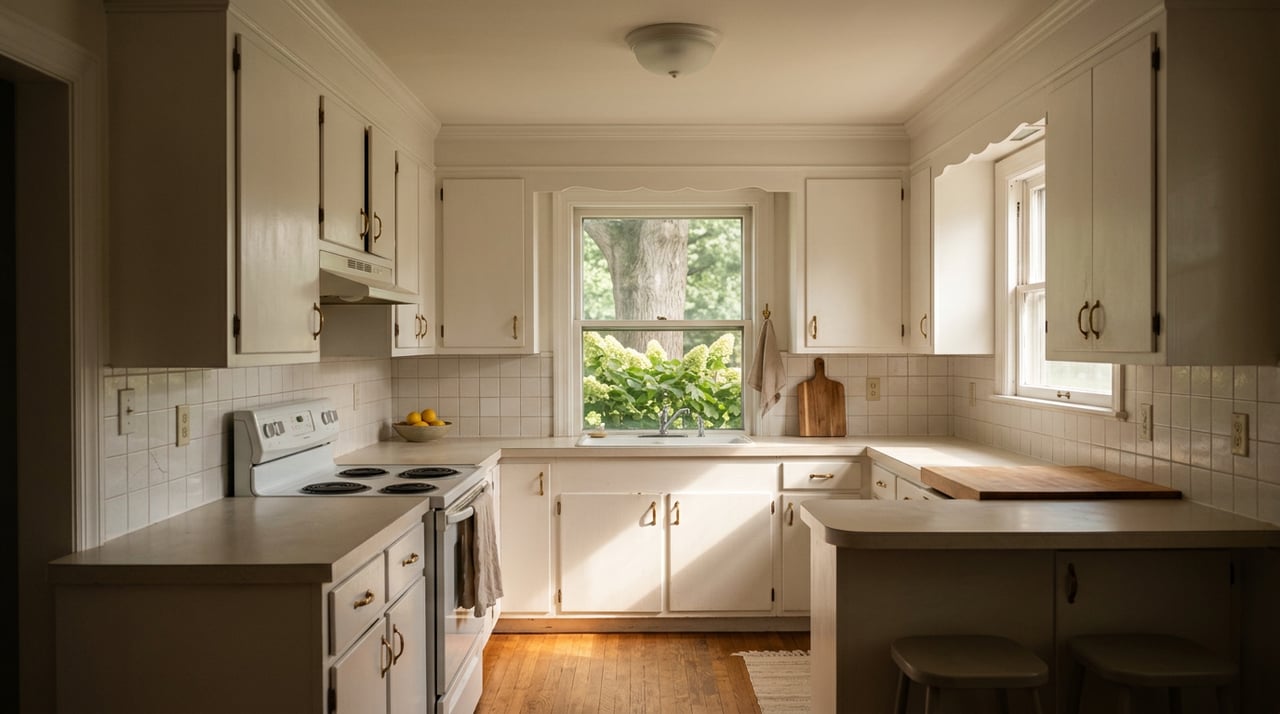
A homeowner who spends the spring reroofing, repainting, and refinishing the kitchen before listing is making a bet: that the next owner wants the house. In much of Potomac, that bet is not safe, and the reason has nothing to do with taste or timing. It comes down to a zoning number most sellers never see until an appraiser or a builder explains it to them.
Montgomery County's residential estate zones set a floor under every Potomac lot long before a single offer arrives. The RE-1 zone requires a minimum net lot area of 40,000 square feet. RE-2 requires two full acres. Those aren't neighborhood averages. They're the smallest parcel the county will allow, which means every lot built to that standard carries a baseline land value that exists whether the house on it is a showplace or a shell. When a home built in 1972 sits on land the county guarantees is large, the land's value doesn't wait for the house to earn it.
The Stock That Makes This Personal
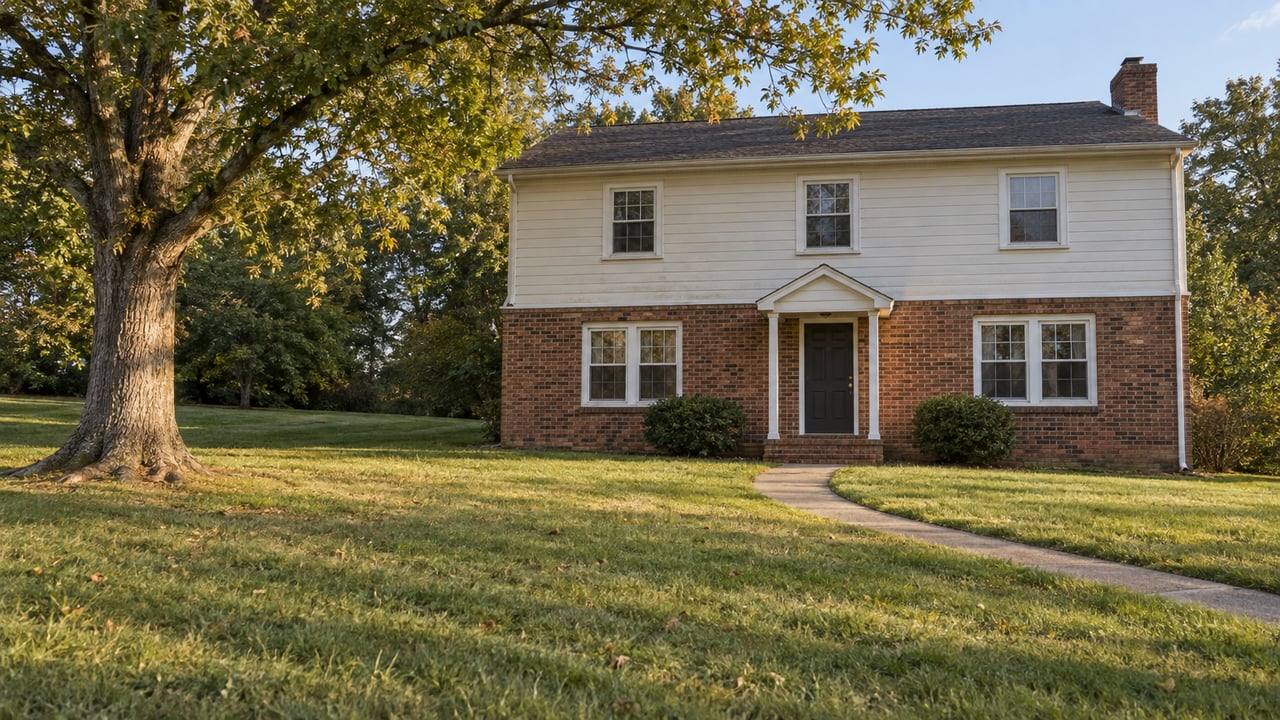
Potomac's housing stock gives this zoning math somewhere real to land. A large share of the county's Potomac inventory dates from the 1960s through the 1980s: colonials, ramblers, and split-levels that suited the families who built them and often don't suit the buyers who tour them now. Lots in these established sections run from about half an acre up to two full acres. When the land underneath a dated colonial is worth more than the colonial itself, the house stops being the asset that appreciates and starts being the one that depreciates while the dirt beneath it holds its value or gains.
This isn't a hypothetical problem for a handful of unlucky sellers. Kevin Slezak, who has run Colonial Design & Build's projects personally across more than 200 homes since 2007, describes Potomac's teardown-rebuild work as the firm's specialty precisely because so much of the county's older acreage stock fits this profile. The company buys and builds five to ten spec homes a year on lots it purchases itself, priced between $1.5 million and $3.5 million when finished, and runs the identical evaluation for homeowners considering a sale: what the lot can carry, and what the county will actually permit on it. As Slezak's team puts it, the hardest part of a teardown is deciding whether the house is worth saving or the lot is worth more without it.
That decision gets made on every Potomac lot that comes to market, whether the seller realizes it or not.
What a Builder Actually Prices
A family touring a resale home is pricing the kitchen, the school assignment, the light in the primary bedroom. A builder pricing the same address is running a different calculation entirely, one that has almost nothing to do with what's inside the walls. The line items that matter to a builder include:
- Zoning setbacks and the buildable envelope they leave once minimums are honored
- Septic capacity, since sections of Potomac sit outside the public sewer system entirely
- Well yield, tested before a single floor plan gets drawn
- Tree save areas and any forest conservation easement that can shift a footprint by forty feet or more
None of those line items involve the roof a seller just replaced or the kitchen a seller just repainted. A builder's bid is built from the parcel, not the finishes, which is why a renovation that would sway a family buyer can leave a builder's number completely unchanged.
This matters most for a longtime Potomac owner weighing whether to invest before listing. If the property is likely to draw builder interest, money spent on updates a builder will demolish anyway doesn't return at closing. If the property is more likely to draw a family buyer who plans to live in the house as it stands, the same updates can matter a great deal. The honest starting point isn't a contractor's estimate. It's a read on which kind of buyer the lot itself is going to attract, and that read depends on the parcel, not the paint color.
Not Every Potomac Lot Points the Same Direction
The teardown math doesn't apply evenly across the community, and the exceptions are informative. Avenel, home to roughly 900 residences built around the TPC Potomac golf course, operates under architectural guidelines that require review and approval for exterior changes and major additions, with neighbor notification built into the process for larger projects. That kind of design continuity works against the land-over-structure math, because a covenant-governed home is competing on upkeep and presentation in a way an uncovered 1970s rambler simply isn't. Potomac Falls, with about 260 homes on minimum two-acre lots around Sidey Lake, occupies a similar category: the scale of the lots is part of the land math, but the community's structure and presentation tend to keep resale buyers, not builders, in the bidding.
The properties most exposed to the teardown calculation are the ones built to an earlier era's floor plan, on a lot without a design-review association attached, in a section where the surrounding parcels have already started turning over to new construction. A homeowner in one of Potomac's original 1960s or 1970s subdivisions is often sitting on exactly that combination, whether they've thought about it that way or not.
Why the 2026 Slowdown Changes the Timeline, Not the Math
Potomac's market has cooled from where it stood a year ago, and that shift changes how much time a builder gets to run the numbers before bidding. Over the three months ending in May 2026, homes in Potomac sold in about 22 days on average, up from roughly 10 days the year before, even as the median sale price held near $1.3 million. Movoto's June 2026 figures put the median at $1,242,000 with a 33-day average market time. Homes.com's trailing twelve-month figure lands higher, at $1,321,500, up about one percent year over year.
The specific number varies by source and window, which is normal when different platforms pull from different trailing periods. What holds across all three is the direction: Potomac properties are sitting longer than they did a year ago. For a family buyer, that extra time on market can read as leverage to negotiate. For a builder evaluating a teardown lot, it's something closer to breathing room. A faster market compresses due diligence into a matter of days and rewards the seller who gets a bidding war going before anyone can run a careful lot analysis. A slower one gives a builder the extra week or two to check septic records, confirm setbacks, and price the rebuild properly before submitting a number. The land value hasn't moved. The pace at which someone gets to verify it has.
What This Means Before the First Contractor Call
None of this means a Potomac seller should assume their home is destined for demolition, and it doesn't mean renovation is a wasted move everywhere in the community. It means the question comes before the contractor, not after. A homeowner in an architecturally governed section like Avenel is likely still competing on presentation. A homeowner in an older, uncovenanted section with a half-acre to two-acre lot and a structure dating to the 1960s through 1980s is more likely competing on what the parcel allows, and that's a conversation worth having with someone who can read the lot the way a builder would, before money goes into a kitchen the next owner may never see.
The house you're selling might be exactly what the next family wants. It might also be the least valuable thing on the property. Finding out which one applies to your address is worth doing before, not after, you decide what to spend getting ready.
If you're weighing a Potomac sale and want a clear read on what your specific lot and structure are actually worth to the market, before you spend a dollar on preparation, Next Step Living can walk through that math with you. Contact Us.