A Chevy Chase homeowner who has decided to downsize usually hears the same story before they've toured a single condo. Chevy Chase isn't one town, someone will explain. It's twelve of them: Chevy Chase Village, the Town of Chevy Chase, Section 3, Section 5, Martin's Additions, and a handful more, each setting its own municipal tax rate on top of the state and county rate. Two homes a few blocks apart can carry different bills even at identical assessed values. It's a good story. It's also, once you run the actual numbers, not the number that decides whether your downsizing budget works.
The bigger swing lives somewhere the twelve-municipality story never mentions: the monthly condo fee.
The Twelve-Municipality Story You'll Hear First
The tax patchwork is real and worth understanding before you write an offer. Maryland's state rate is $0.112 per $100 of assessed value. Montgomery County's fiscal year 2025 rate adds $0.978. On top of that, an incorporated municipality layers its own charge: Chevy Chase Village adds $0.0672, Section 3 adds $0.10, and the Town of Chevy Chase adds just $0.0079.
Stack those and you get three different combined rates for three addresses that all say "Chevy Chase" on the mailing label:
| Jurisdiction | Combined rate per $100 assessed |
|---|---|
| Town of Chevy Chase | $1.0979 |
| Chevy Chase Village | $1.1572 |
| Section 3 | $1.19 |
On a $1.3 million assessed value, the gap between the cheapest and the most expensive of these three runs about $1,200 a year, or roughly $100 a month. That range lines up with what a property tax research firm has separately estimated for the 20815 zip code: a median effective rate around 1.16% and a median annual bill near $12,749. The math checks out. The municipality you land in does move your bill.
It just doesn't move it very much, compared to what's coming next.
What the Condo Fee Actually Swings
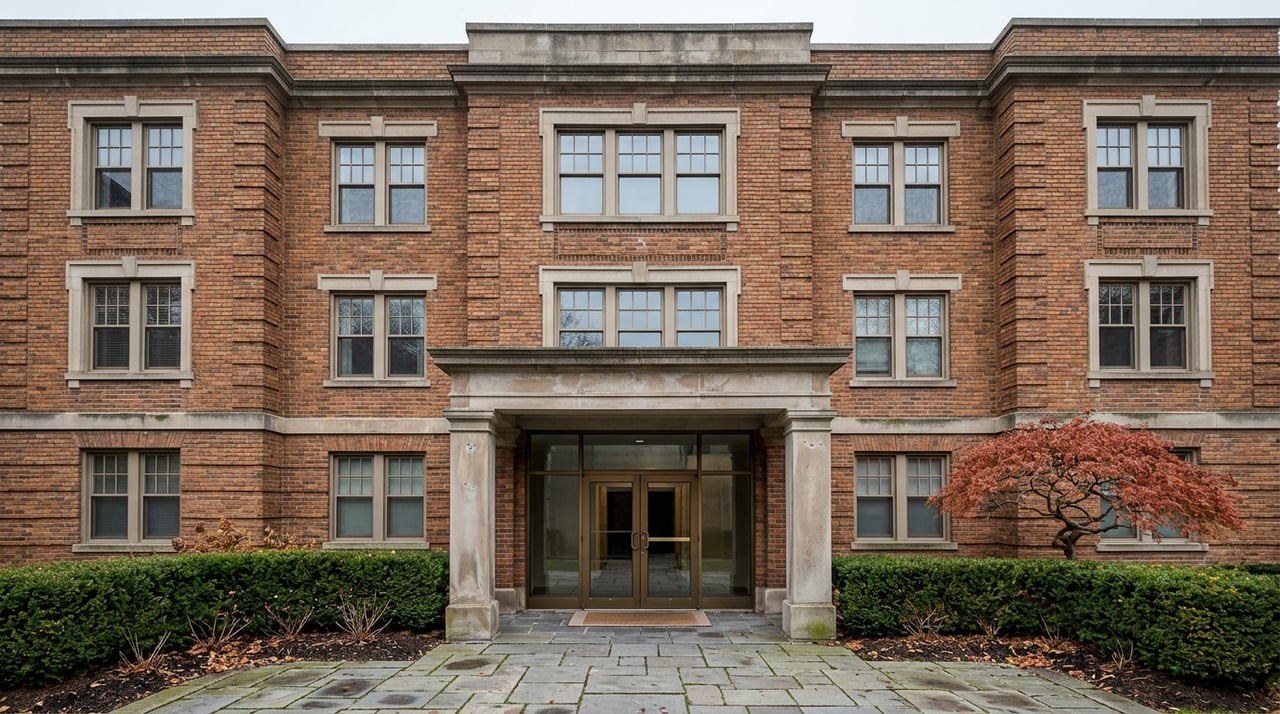
At 8101 Connecticut Avenue, a 174-unit mid-rise built in 1982 near the Chevy Chase Lake district, the monthly association fee across recent unit listings has run anywhere from around $1,200 to over $1,800, depending on the unit's size, what's bundled into the fee, and how recently the reserve contribution was adjusted. That's not a rounding difference. Between a unit at the low end of that range and one at the high end, you're looking at nearly $700 a month, or more than $8,000 a year, in association dues alone, before you've compared a single tax rate.
A few miles down the same corridor, The Ritz-Carlton Residences at Chevy Chase Lake tells a version of the same story from the new-construction side. The building opened in 2022 and 2023 with 65 units across four collections, priced from the high $800,000s for the smallest layout up through $1.5 million and beyond for the largest. As recently as this spring, it was down to its last handful of resale units, and the seller was offering to cover a full year of condo fees for buyers who closed by a set date. A builder doesn't hand over twelve months of fees as a sweetener unless those fees are a real enough number to move a buyer's decision.
Put the two data points side by side and the shape of the problem is clear. A downsizing household comparing two condos at a similar purchase price, in the same zip code, under the same twelve-municipality tax umbrella, can still end up with association dues that differ by $500 or more a month depending entirely on which building they choose. That's a swing several times larger than anything the municipal tax patchwork produces on its own.
The twelve towns are a real story. They're just not the number that decides whether the new monthly payment actually works out lower than the old one.
The Metro Station That Isn't Open Yet
There's a second assumption worth checking before it factors into an offer: the Purple Line. Several listings in the Chevy Chase Lake corridor market proximity to a future light rail station as a near-term amenity, the kind of detail that can nudge a buyer toward paying a premium now for convenience later.
The project's own construction updates, current through this summer, still show work underway on basic site elements near Chevy Chase Lake Drive, including curbs, sidewalks, and final paving, with that stretch alone targeted for completion by the end of summer 2026. Test trains have been running overnight through sections near College Park as systems testing continues. That's genuine progress. It's also not the same as an open station. Maryland's transit project tracking and reporting on the line's history point to revenue service sometime in 2027, with estimates ranging from mid-year to late in the year, meaning at least several months and possibly more than a year past today.
If you're weighing a condo partly on the strength of "the Metro station is coming," it's worth asking coming when, and pricing the wait into your decision rather than treating the amenity as already delivered.
What This Means for a Downsizing Plan
None of this argues against a Chevy Chase condo. It argues for running the comparison in the right order. Before comparing a house's tax bill to a condo's tax bill, compare the condo's fee to another condo's fee. The building matters more than the block.
A few questions worth asking before you go further:
- What does the association fee actually include: water, sewer, trash, parking, a management company, or a reserve contribution, and how has that fee changed over the past three years?
- Is there a pending or recent special assessment, and if so, what was it for?
- Which of the twelve Chevy Chase jurisdictions does this specific address sit in, and what's the combined rate?
- If transit access is part of the appeal, what's the realistic timeline, and does today's price already assume it's finished?
- How does the total monthly carry, mortgage plus fee plus tax, compare to what you're paying now, not just the purchase price?
That last question is the one the twelve-municipality story tends to skip past. A smaller address with a bigger fee can cost more each month than a larger one with a smaller fee, even in the same zip code.
A Few Questions Worth Asking First
Does every Chevy Chase condo carry a monthly fee this high? No. Fees vary building to building based on age, amenities, staffing, and how the reserve fund is managed. The range described here reflects two specific buildings and isn't a neighborhood-wide average.
Is the municipal tax difference big enough to factor into a decision? It's real, generally in the range of a few hundred to about $1,200 a year between the lowest and highest municipal add-on on a comparable assessed value. Worth confirming for a specific address, but rarely the deciding factor on its own.
Should I wait for the Purple Line to open before buying near a station? That depends on your timeline and priorities, not a market prediction. What's worth avoiding is paying today's price as though the station is already running when the realistic opening is still likely months, and possibly more than a year, away.
Every Chevy Chase downsize runs on its own numbers, and the fee schedule for a specific building or the tax rate for a specific address is worth confirming directly rather than assumed from a neighborhood average. If you're weighing a move like this for yourself or helping a parent think it through, Next Step Living can walk through the actual documents, building by building, before any offer gets written.